
Blog
The Hidden Cost of Poor Lead Qualification in B2B Marketing
Most B2B demand programs don’t fail because of low volume.
They fail because of poor qualification discipline.
On the surface, everything looks healthy:
- Strong lead flow
- Healthy MQL counts
- Competitive CPL
- Active campaigns
But inside the pipeline, problems begin to surface:
- Sales rejects leads
- Follow-ups stall
- Opportunities don’t materialize
- Forecasts become unreliable
The issue isn’t activity.
It’s quality control.
And the cost of poor qualification is far greater than most organizations realize.
The Illusion of Productivity
When marketing reports high lead numbers, it signals success.
But volume without validation creates:
- Inflated reporting
- Frustrated sales teams
- Slower deal cycles
- Budget inefficiency
Sales teams begin questioning marketing credibility.
Marketing teams defend performance metrics.
Pipeline becomes political instead of predictable.
Poor qualification creates internal friction.
What Poor Qualification Actually Looks Like
It’s not always obvious.
It appears in subtle ways:
- Contacts outside ICP
- Job titles without buying authority
- No active initiative
- No confirmed timeline
- No defined budget
- No clear pain alignment
The lead may meet demographic criteria — but lacks commercial readiness.
This is where pipeline begins leaking.
The Financial Cost of Unqualified Leads
Let’s quantify the damage.
When underqualified leads enter sales:
- SDR time is wasted
- Discovery calls underperform
- Sales cycles extend
- Close rates decline
- Forecast accuracy drops
If sales spends hours pursuing non-viable prospects, opportunity cost compounds rapidly.
Marketing budget is also diluted.
Poor qualification inflates cost per opportunity — even if cost per lead appears efficient.
This misalignment creates false performance indicators.
Why Traditional MQL Frameworks Fail
Many organizations define MQL using:
- Form submissions
- Content downloads
- Webinar attendance
- Basic demographic fit
These actions indicate interest — not readiness.
Interest does not equal buying initiative.
Modern B2B buying is complex.
Stakeholders research long before engaging vendors.
Without verifying:
- Active project status
- Buying committee involvement
- Decision authority
- Timeline clarity
Leads remain speculative.
The Shift to Revenue-Based Qualification
High-performance demand teams redefine qualification around sales alignment.
Instead of asking:
“Does this contact match our ICP?”
They ask:
“Is this account in-market?”
Revenue-based qualification frameworks validate:
✔ Role relevance
✔ Organizational fit
✔ Initiative presence
✔ Buying influence
✔ Commercial timeline
✔ Competitive awareness
This ensures sales receives conversations — not contacts.
The Role of Human Verification
Automation can enrich data.
AI can score engagement.
But human validation protects pipeline quality.
Elite B2B demand programs layer:
- AI-driven scoring
- Behavioral intent analysis
- Manual verification frameworks
- Sales feedback loops
This hybrid model improves:
- Sales acceptance rate
- Meeting-to-opportunity conversion
- Close rate performance
Automation scales speed.
Human intelligence protects accuracy.
The Sales Relationship Impact
When qualification weakens, sales loses trust.
When qualification strengthens, sales alignment improves.
Strong qualification results in:
- Faster follow-up
- Higher meeting engagement
- Better discovery conversations
- Increased close confidence
Sales begins viewing marketing as a revenue partner — not a lead provider.
That shift transforms performance.
How Poor Qualification Slows Pipeline Velocity
Pipeline velocity depends on:
- Lead quality
- Decision-maker access
- Initiative clarity
- Timing alignment
If any of these are missing, velocity drops.
Deals stall.
Forecasts fluctuate.
Revenue becomes unpredictable.
Quality control at the qualification stage prevents downstream inefficiency.
The Enterprise Standard for Qualification
High-performance organizations implement structured validation systems.
These include:
1️⃣ ICP Precision
Clear definition of ideal account criteria.
2️⃣ Multi-Stakeholder Mapping
Identifying buying committee members early.
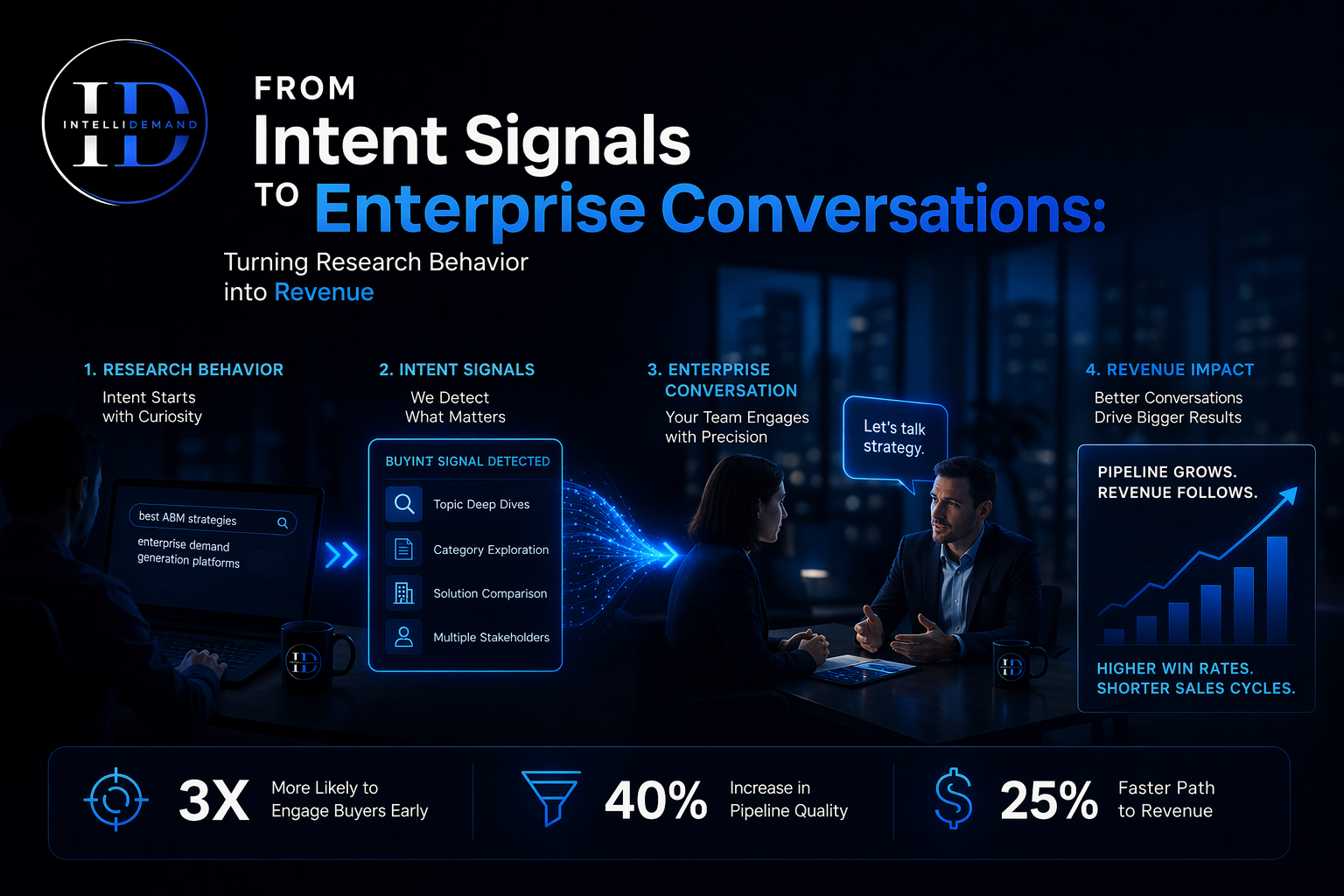
3️⃣ Intent Layering
Confirming active research behavior.
4️⃣ Sales-Approved Criteria
Predefined SQL validation frameworks.
5️⃣ Continuous Optimization
Refining qualification standards based on win analysis.
This transforms lead generation into pipeline engineering.
The Competitive Advantage of Qualification Discipline
In competitive markets, speed matters.
But precision matters more.
Organizations that protect pipeline quality:
- Waste less sales time
- Improve win rates
- Strengthen brand credibility
- Increase ROI efficiency
Qualification is not friction.
It is filtration.
And filtration protects revenue.
From Leads to Revenue-Ready Conversations
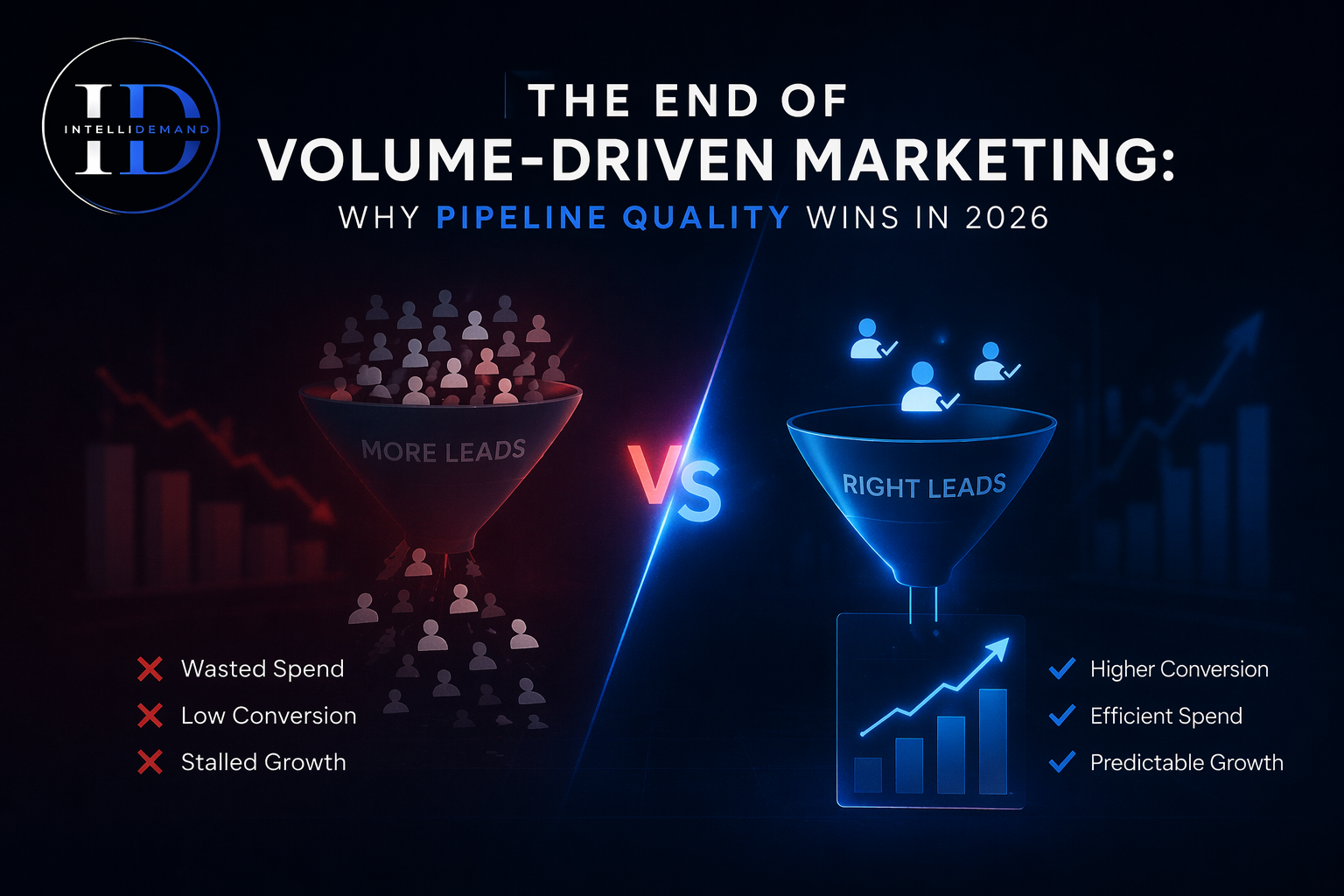
The future of B2B demand generation isn’t about maximizing volume.
It’s about maximizing readiness.
When qualification becomes revenue-driven:
- Marketing performance improves
- Sales productivity increases
- Pipeline becomes predictable
- Growth becomes scalable
Quality is not optional.
It is the foundation of sustainable demand generation.
Final Thought
If your pipeline feels inconsistent…
If sales rejects marketing leads…
If revenue forecasting feels unstable…
The issue may not be volume.
It may be qualification discipline.
Because in modern B2B marketing:
Lead generation creates opportunity.
Qualification creates revenue.

Copyright © 2026 IntelliDemand