
Blog
The Future of B2B Demand Generation:From Campaigns to Revenue Engineering
For years, B2B demand generation was campaign-driven.
Launch a webinar.
Run a content syndication push.
Send an email blast.
Report on MQLs.
Repeat.
But modern B2B markets have evolved.
Buying cycles are longer.
Committees are larger.
Data is deeper.
Competition is sharper.
The future of demand generation is not campaign execution.
It is revenue engineering.
And the companies that understand this shift will dominate the next decade.
The End of the Campaign Era
Campaigns are temporary.
Revenue systems are continuous.
The traditional campaign mindset focuses on:
- Activity spikes
- Short-term CPL
- Periodic reporting
- Isolated tactics
Revenue engineering focuses on:
- Infrastructure
- Data intelligence
- Account progression
- Pipeline velocity
- Predictable growth
Campaigns create bursts.
Engineering creates momentum.
What Revenue Engineering Actually Means
Revenue engineering is the structured design of a demand ecosystem that:
- Identifies in-market accounts
- Activates buying signals
- Orchestrates multi-touch engagement
- Validates sales readiness
- Aligns with pipeline contribution
- Optimizes based on revenue feedback
It is systematic.
It is measurable.
It is accountable.
And it integrates marketing, sales, and data into one revenue architecture.
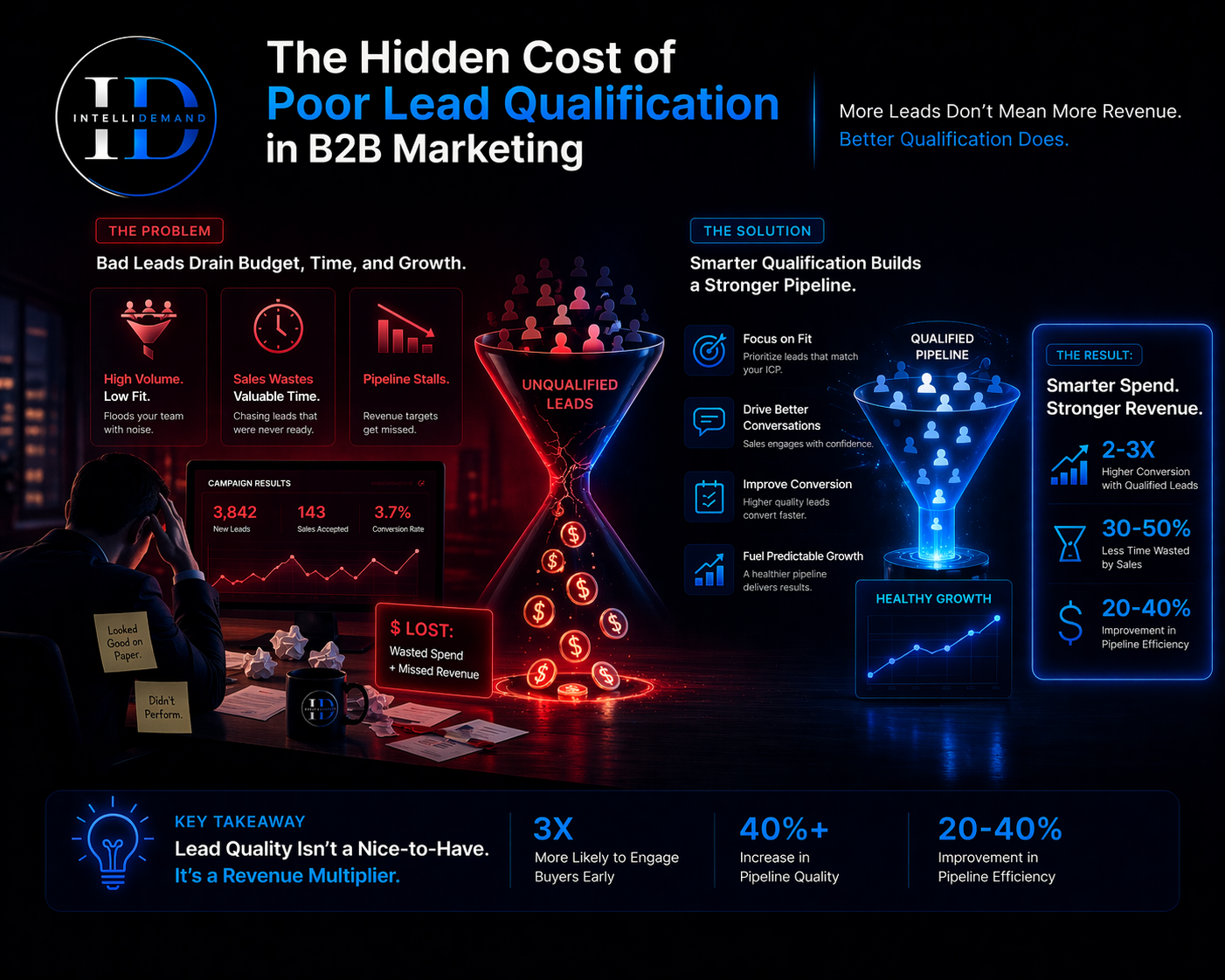
Why Lead Volume Is Losing Relevance
Historically, demand success was defined by:
- MQL growth
- Cost per lead
- Content downloads
But these metrics do not reflect revenue impact.
Modern revenue leaders prioritize:
✔ Sales acceptance rate
✔ Cost per SQL
✔ Opportunity conversion
✔ Pipeline velocity
✔ Revenue influence
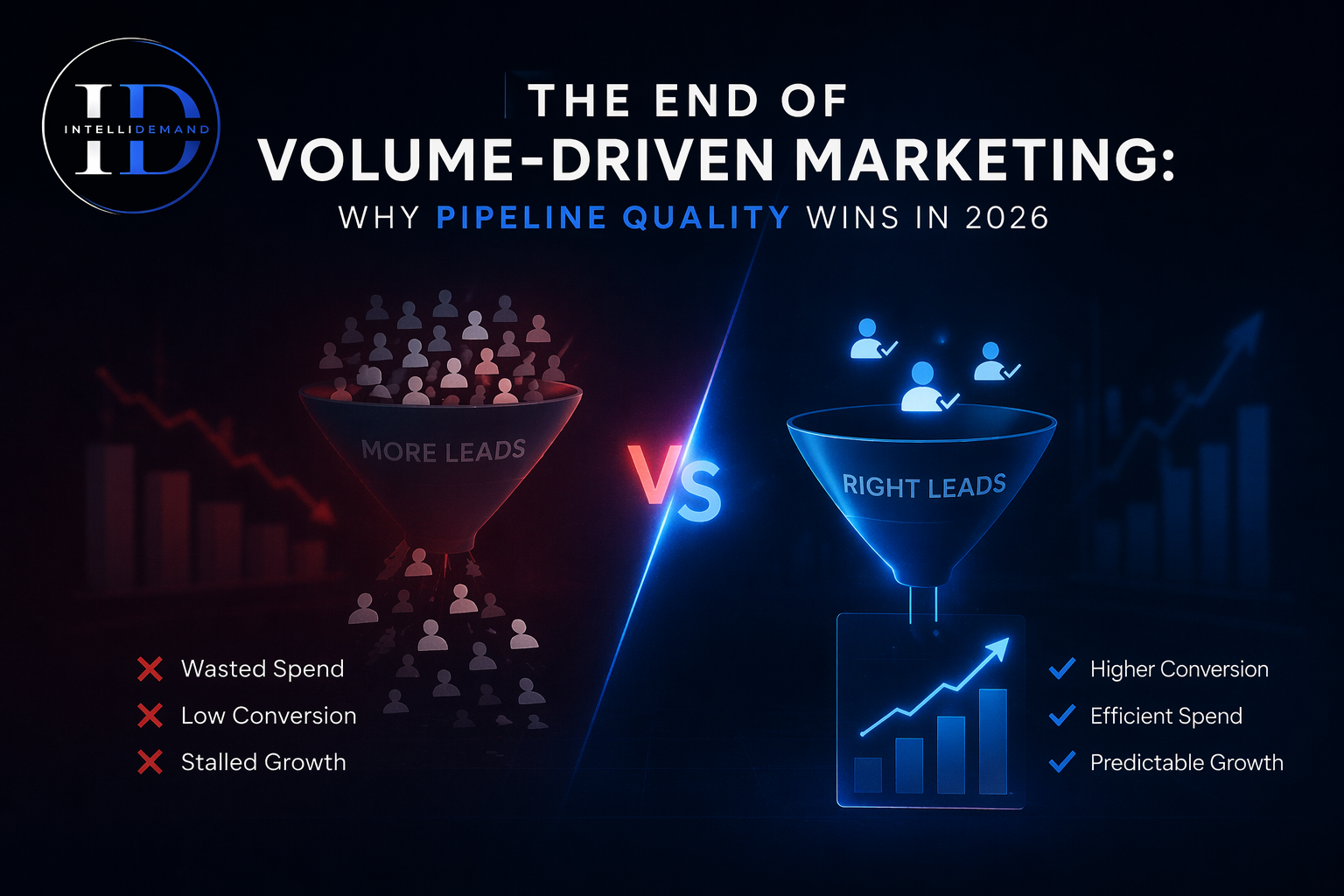
Lead volume without conversion discipline inflates reporting — not growth.
Revenue engineering shifts focus from quantity to contribution.
The Rise of Account-Level Strategy
Future demand engines operate at the account level.
They track:
- Buying committee engagement
- Intent escalation
- Cross-channel interaction
- Stakeholder coverage
Instead of celebrating single-contact activity, revenue engineering monitors account momentum.
Momentum predicts pipeline.
Pipeline predicts revenue.
Data as a Strategic Asset
Data is no longer just a targeting tool.
It is a decision-making engine.
High-performance demand teams integrate:
- First-party behavioral data
- Intent signals
- Technographic intelligence
- Sales feedback loops
- Performance analytics
This layered intelligence informs:
- Targeting precision
- Message personalization
- Outreach timing
- Qualification standards
Data reduces guesswork.
Precision reduces waste.
AI + Human Oversight
Artificial intelligence has transformed B2B marketing.
But AI alone cannot replace strategic discipline.
The future of demand generation blends:
✔ Predictive analytics
✔ Automated scoring
✔ Behavioral modeling
✔ Human validation
✔ Revenue oversight
Automation scales execution.
Human insight protects quality.
This hybrid approach ensures sustainable performance.
The Infrastructure Behind Predictable Growth
Revenue engineering requires structured systems.
These include:
- Integrated CRM ecosystems
- Marketing automation alignment
- Multi-touch orchestration workflows
- Intent activation frameworks
- Qualification validation processes
- Revenue reporting dashboards
Without infrastructure, performance becomes reactive.
With infrastructure, growth becomes intentional.
From Marketing Function to Revenue Function
The most significant shift ahead is philosophical.
Demand generation is no longer a marketing department initiative.
It is a revenue function.
This means:
- Marketing and sales share targets
- Performance is measured by pipeline impact
- Campaigns align to revenue outcomes
- Qualification standards are jointly defined
- Optimization is continuous
Demand generation evolves from cost center to growth engine.
The Competitive Advantage of Revenue Engineering
Organizations that adopt revenue engineering early gain:
- More predictable pipeline
- Higher sales efficiency
- Stronger forecast accuracy
- Reduced acquisition waste
- Scalable global expansion
Those who remain campaign-focused struggle with:
- Pipeline volatility
- Sales misalignment
- Inflated metrics
- Inconsistent growth
The gap will widen.
What Leaders Must Do Now
To prepare for the next era of B2B demand, organizations must:
1️⃣ Redefine success metrics around revenue
2️⃣ Build multi-touch account architecture
3️⃣ Integrate intent into structured workflows
4️⃣ Strengthen qualification discipline
5️⃣ Align marketing and sales under shared KPIs
6️⃣ Invest in data-driven infrastructure
This is not an incremental adjustment.
It is a structural evolution.
The Strategic Shift
The transformation can be summarized simply:
Leads → Accounts
Campaigns → Systems
Activity → Architecture
Metrics → Revenue
Marketing → Revenue Engineering
This shift separates high-growth organizations from stagnant competitors.
Final Thought
The future of B2B demand generation will not be won by the loudest brand.
It will be won by the most disciplined revenue system.
Campaigns generate attention.
Revenue engineering generates growth.
The question is not whether demand generation works.
The question is whether your infrastructure is designed to outperform.

Copyright © 2026 IntelliDemand